Water dispenser guide
How to Choose a Water Dispenser for Your Market: A B2B Buyer’s Guide
Choosing a water dispenser for a new market is not simply a matter of selecting an attractive model and comparing prices.
For importers, distributors and private-label brands, the right product depends on how and where it will be used, how water is supplied, which temperature functions are required, whether filtration is needed, and what local electrical and market requirements must be considered.
A model that works well for residential customers may not be the most suitable option for an office or shared commercial environment. Likewise, two water dispensers with a similar appearance can have very different internal configurations.
This guide looks at the main factors B2B buyers should consider before selecting a water dispenser range or requesting a quotation.
1. Start with the Water Dispenser Format
The first step is to decide which product format fits your target market.
Floor-Standing Water Dispensers
Floor-standing dispensers are one of the most versatile formats and can be positioned for residential, office and commercial applications.
Depending on the model, they may offer different dispensing layouts, storage configurations, cooling systems and cabinet designs.
For distributors building a broader product range, floor-standing platforms also provide flexibility in terms of appearance and functional configuration.
Countertop Water Dispensers
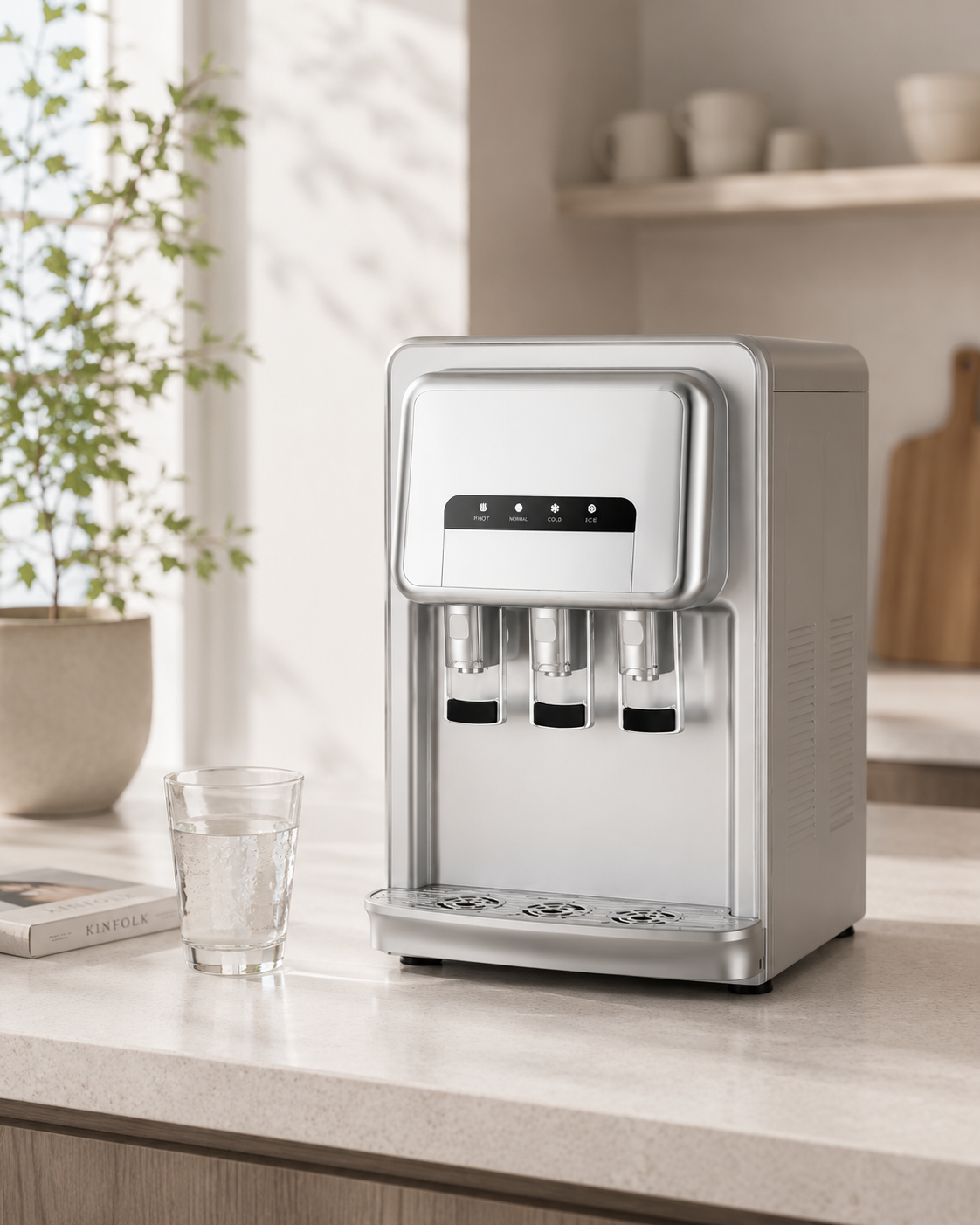
Countertop models provide a more compact solution where floor space is limited.
They can be suitable for kitchens, smaller offices, reception areas and other environments where a full-height dispenser is unnecessary or difficult to accommodate.
For B2B buyers, countertop models can also serve a different retail segment from conventional floor-standing dispensers, allowing a product range to address multiple space and usage requirements.
Bottom-Loading Water Dispensers
In a bottom-loading design, the water bottle is placed inside the lower cabinet rather than on top of the dispenser.
This creates a cleaner exterior appearance and avoids the traditional exposed bottle at the top of the machine.
Bottom-loading models can therefore be considered when product appearance and ease of bottle handling are important parts of the target market positioning.
POU Water Dispensers
Point-of-use, or POU, water dispensers connect directly to the incoming water supply instead of depending solely on replaceable water bottles.
For these products, the dispenser itself is only one part of the system. Buyers also need to consider the incoming water quality, filtration configuration, cartridge replacement and ongoing maintenance requirements.
This makes POU selection more dependent on the conditions of the destination market.
2. Floor-Standing or Countertop?
Neither format is inherently better. The right choice depends on the intended application.
| Consideration | Floor-Standing | Countertop |
|---|---|---|
| Installation | Placed directly on the floor | Installed on a counter or table |
| Space | Requires dedicated floor space | Smaller overall footprint |
| Typical Applications | Home, office, shared spaces | Home, small office, compact spaces |
| Product Positioning | Broad and flexible | Compact and space-conscious |
| Configuration | Wide range of formats | Depends on individual model |
For buyers planning a new product range, it may make sense to offer both rather than treating them as competing formats.
A floor-standing model can serve the mainstream dispenser market, while a countertop option can address customers who prioritize compact installation.
3. Define the Required Water Temperature Functions
After selecting the basic format, buyers should determine which water functions are actually required.
Depending on the model and configuration, water dispensers may provide combinations such as:
- Hot and cold water
- Hot, cold and ambient water
- Other model-specific dispensing configurations
This decision affects more than the number of taps or buttons visible on the front panel.
Heating and cooling requirements influence the internal structure, electrical configuration, operating requirements and product cost.
Before requesting a quotation, buyers should therefore specify the expected dispensing functions instead of simply asking for a general “water dispenser price.”
4. Check the Cooling and Heating Configuration
Two water dispensers that look similar from the outside may use different internal systems.
When evaluating models, B2B buyers should check model-specific information such as:
- Cooling capacity
- Heating capacity
- Rated power
- Cooling method
- Internal water storage
- Tank configuration
A number of water dispenser platforms in the QLORA range use high-efficiency compressor cooling, while configurations vary between models.
For this reason, performance specifications should always be checked for the selected model rather than assumed from product appearance alone.
The intended application matters as well. A dispenser for occasional residential use may have different operating requirements from a machine expected to serve multiple users throughout the working day.
5. When Does Built-In Filtration Matter?
Filtration becomes particularly important when considering POU water dispensers.
Because these systems connect to the incoming water supply, there is no single filtration configuration that is suitable for every project.
Buyers should first consider:
- Feed-water conditions
- Target filtration objective
- Cartridge configuration
- Replacement cartridge availability
- Maintenance requirements
- Expected replacement cycle
The filtration system should therefore be selected according to the actual application rather than simply adding as many filtration stages as possible.
For distributors and private-label brands, replacement cartridges are also part of the long-term product strategy. Cartridge availability, replacement convenience and ongoing supply can influence the customer experience long after the initial dispenser has been sold.
Where more advanced purification is required, buyers can also evaluate the dispenser together with the appropriate water filtration solution rather than treating the two as unrelated products.
6. Match the Dispenser to the Application
The intended application should influence product selection from the beginning.
Residential
For home use, buyers may place greater emphasis on:
- Product dimensions
- Appearance
- Ease of operation
- Temperature functions
- Installation space
- Maintenance convenience
The dispenser is often visible in the living environment, making exterior design particularly relevant.
Office
Office applications may require more attention to:
- Usage frequency
- Heating and cooling requirements
- Dispensing convenience
- Maintenance
- Water supply format
The expected number of users should be considered when selecting a suitable configuration.
Hospitality
In hospitality-related applications, the appearance of the dispenser may need to fit the surrounding environment while still allowing practical operation and servicing.
Buyers should consider where the machine will be installed, who will use it and how maintenance will be managed.
Commercial and Shared Spaces
For shared-use environments, product selection may place more emphasis on:
- Capacity requirements
- Durability
- Operating requirements
- Maintenance
- Ease of use
The correct configuration should be determined by the specific project rather than assuming that a residential model can simply be transferred to a higher-use environment.
7. Design Matters in Different Markets
Water dispensers are increasingly part of the visible interior environment rather than purely functional appliances.
Product platforms can differ in:
- Cabinet shape
- Color
- Surface finish
- Control-panel design
- Dispensing layout
- Floor-standing or countertop format
For importers and distributors, these differences allow the same product category to be positioned toward different customer groups.
A conventional dispenser may suit a price-driven retail channel, while a more integrated or minimal design may be more appropriate for modern residential or office positioning.
For this reason, buyers should consider both technical configuration and visual positioning when building a product range.
8. Consider OEM and Private Label Requirements Early
For private-label projects, branding should not be left until the final stage of product selection.
Before confirming a model, buyers should discuss requirements such as:
- Product selection
- Logo and private-label branding
- Packaging
- Manual and language requirements
- Plug type
- Voltage and frequency
- Product configuration
- Target-market requirements
QLORA supports water dispenser projects through product selection, OEM branding coordination, packaging support and project configuration coordination.
The earlier these requirements are defined, the easier it is to evaluate whether a particular platform fits the project.
9. Why Similar-Looking Water Dispensers Can Have Different Prices
Price comparisons can become misleading when quotations are based only on product photos.
Two dispensers with a similar exterior may differ in:
- Cooling system
- Heating configuration
- Internal storage
- Tank construction
- Filtration configuration
- Electronic functions
- Dispensing components
- Accessories
- Packaging
- OEM requirements
This does not mean that the more expensive option is automatically the better product.
Instead, B2B buyers should make sure they are comparing equivalent configurations.
A useful quotation should make it clear what is included, which functions are provided and which requirements are optional.
10. Water Dispenser RFQ Checklist
Before contacting a supplier, preparing a basic project brief can make product selection and quotation much more efficient.
Product Requirements
- Floor-standing or countertop
- Bottled, bottom-loading or POU
- Hot / cold / ambient water requirements
- Filtration requirements
- Intended application
Market Requirements
- Target country or market
- Voltage and frequency
- Plug standard
- Required certifications
Commercial Requirements
- Expected order quantity
- Logo / private-label requirements
- Packaging requirements
- Manual language
Providing this information allows the supplier to recommend a more relevant model and prepare a quotation based on the actual project rather than a generic product price.
11. Choosing a Water Dispenser Range, Not Just a Single Model
For distributors, choosing the right water dispenser often means thinking beyond one individual machine.
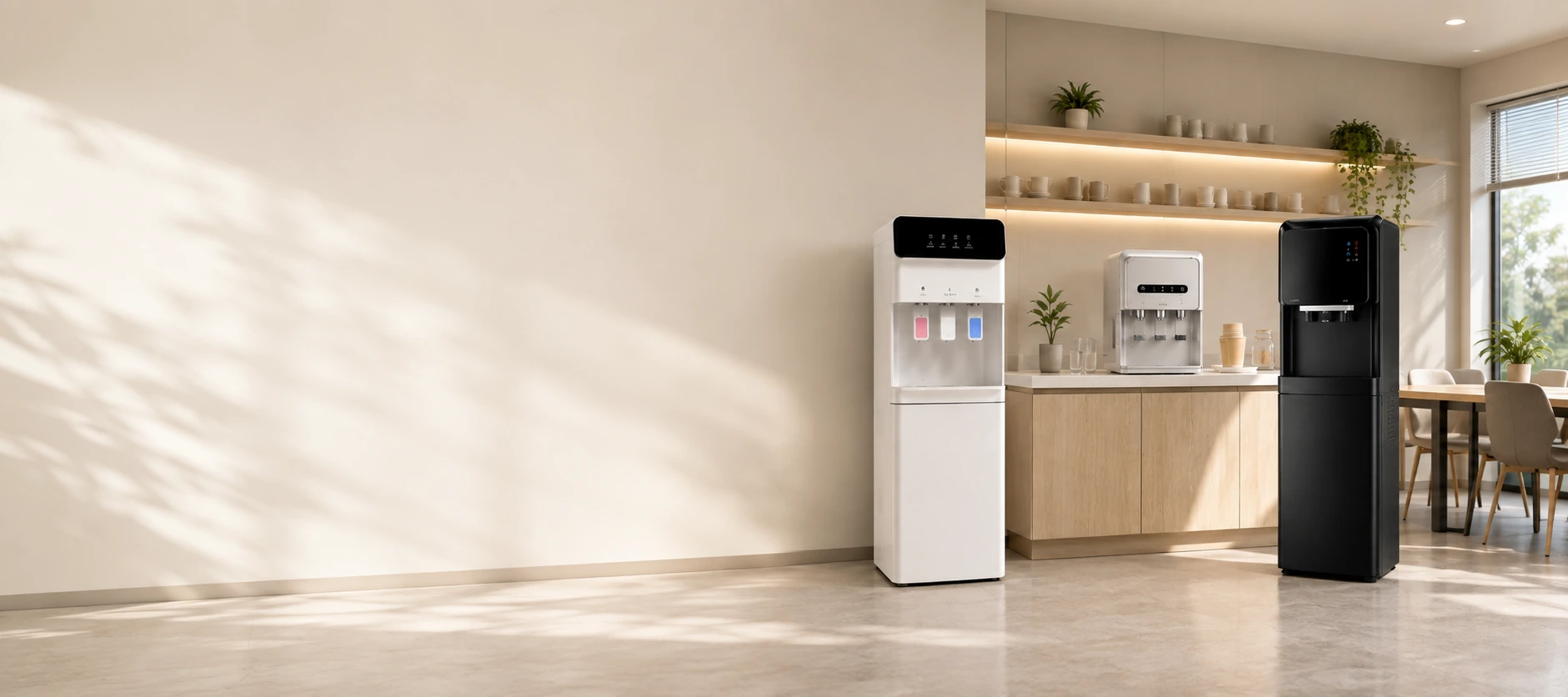
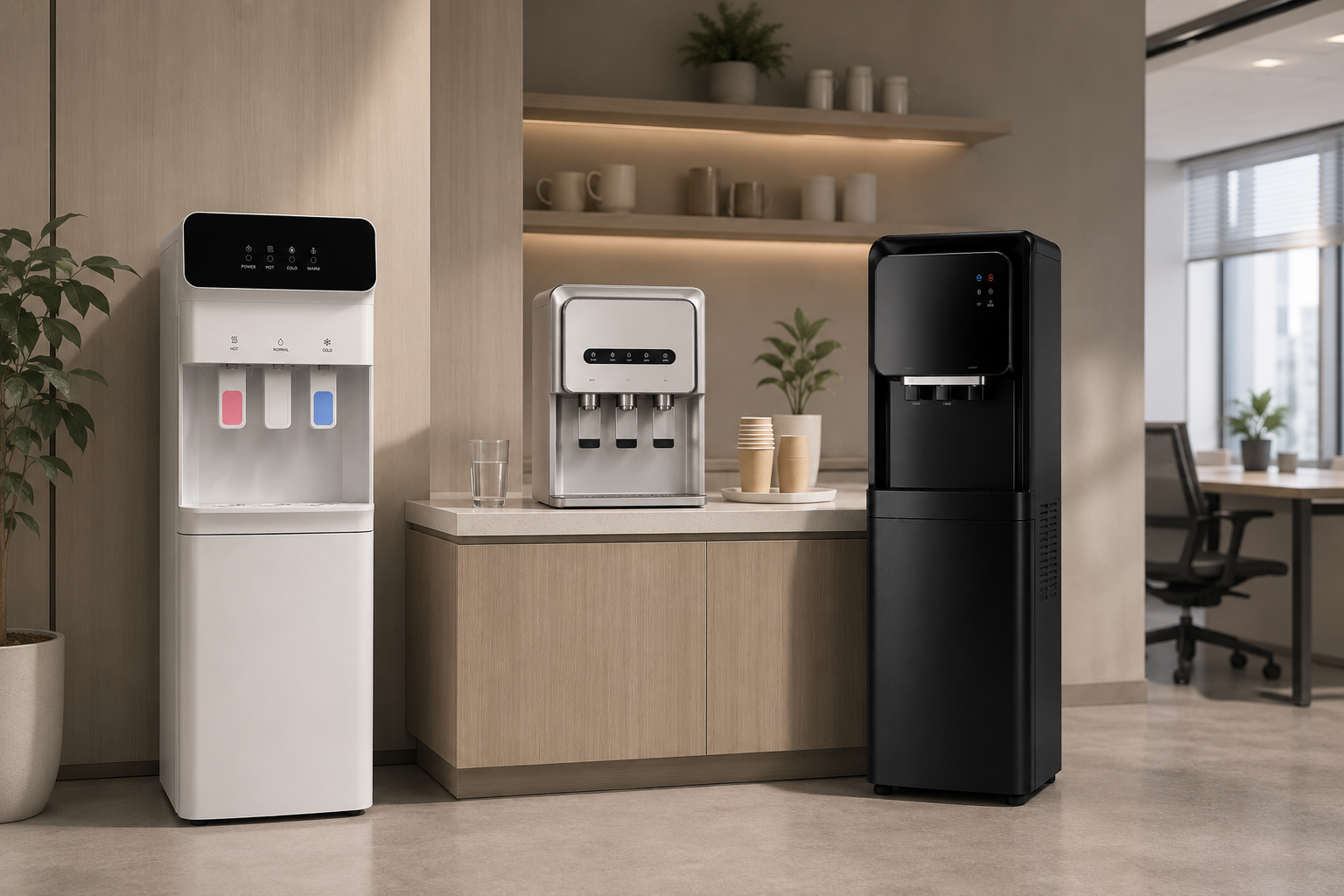
A product range can combine different formats for different customer groups — for example, floor-standing models for broader applications, countertop units for compact spaces, bottom-loading designs for a different user experience, and selected POU systems where direct water supply and filtration are required.
The objective is not to offer every available configuration.
It is to build a product range that matches the needs, price positioning and service capabilities of the target market.
Explore QLORA Water Dispenser Solutions
QLORA offers water dispenser platforms for residential, office and commercial applications, including floor-standing, countertop, bottom-loading and selected POU configurations.
For B2B and private-label projects, product selection can be coordinated together with branding, packaging and configuration requirements.